Lesson Two Reading
15. 5.1. A Suggested Method
Finding an Approach Based on Successful Experience
It should be stated up front that there is no generally agreed theory or even best practices for making this decision. The default mode has been that face-to-face teaching must be inherently superior, and you only go online if you must. However, we have seen that online learning has over the last ten years or so demonstrated clearly that many areas of knowledge can be taught just as well or better online. I will look therefore to examples where there has been a conscious decision to identify the relative affordances of different media, including face-to-face teaching. The area where this becomes most clear is in the teaching of science.
I am going to draw on a method used initially at the U.K. Open University for designing distance education courses and programs in science in the 1970s. The challenge was to decide what was best done in print, on television, via home experiment kits, and finally in a one-week residential hands-on summer school at a traditional university. Since then, Dietmar Kennepohl and Lawton Shaw, of Athabasca University, have edited an excellent book about teaching science online (Kennepohl and Shaw, 2010). Also, the Colorado Community College System has recently been using a combination of remotely operated labs for student practical work, combined with home kits, for teaching online introductory science courses (Schmidt and Shea, 2015).
Each of these initiatives has adopted a pragmatic method for making decisions about what must be done face-to-face and what can be done online. What each of these approaches had in common wais trusting the knowledge and experience of subject experts who are willing to approach this question in an open-minded way and working with instructional designers or media producers on an equal footing.
From these experiences, I have extracted one possible process for determining when to go online and when not to, on purely pedagogical grounds, for a course that is being designed from scratch in a blended delivery mode. It is based on a five-step process:
- Identify the overall instructional approach/pedagogy required
- Identify the main content to be covered
- Identify the main skills to be taught
- Analyze the resources available
- Analyze the most appropriate mode of delivery for each of the learning objectives identified above
I will choose a subject area at random: haematology (the study of blood), in which I am not an expert. But here’s what I would suggest if I was working with a subject specialist in this area.
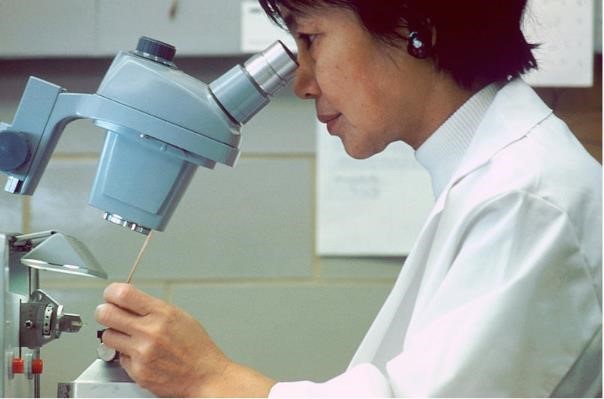
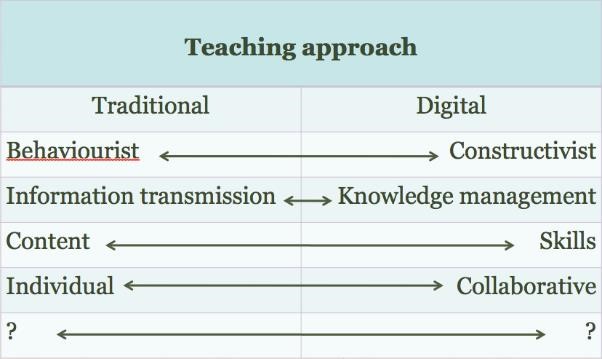
Step 1: Identify the Main Instructional Approach Here are the kinds of decision to be considered. This should lead to a general plan or approach to teaching that identifies the teaching methods to be used in some detail. In the example of haematology, the instructor wants to take a more constructivist approach, with students developing a critical approach to the subject matter. In particular, she wants to relate the course specifically to certain issues, such as security in handling and storing blood, factors in blood contamination, and developing student skills in analysis and interpretation of blood samples. Step 2: Identify the Main Content to Be Covered Content covers facts, data, hypotheses, ideas, arguments, evidence, and description of things (for instance, showing or describing the parts of a piece of equipment and their relationship). What do they need to know in this course? In haematology, this will mean understanding the chemical composition of blood, what its functions are, how it circulates through the body, descriptions of the relevant parts of cell biology, what external factors may weaken its integrity or functionality, and so forth, the equipment used to analyze blood and how the equipment works, principles, theories and hypotheses about blood clotting, the relationship between blood tests and diseases or other illnesses, and so on. In particular, what are the presentational requirements of the content in this course? Dynamic activities need to be explained and representing key concepts in color will almost certainly be valuable. Observations of blood samples under many degrees of magnitude will be essential, which will require the use of a microscope. There are now many ways to represent content: text, graphics, audio, video and simulations. For instance, graphics, a short video clip, or photographs down a microscope can show examples of blood cells in different conditions. Increasingly this content is already available over the web for free educational use (for instance, see the American Society of Hematology’s video library). Creating such material from scratch is more expensive but is becoming increasingly easy to do with high quality, low-cost digital recording equipment. Using a carefully recorded video of an experiment will often provide a better view than students will get crowding around awkward lab equipment. Step 3: Identify the Main Skills To Be Developed During the Course Skills describe how content will be applied and practiced. This might include analysis of the components of blood, such as the glucose and insulin levels, the use of equipment (where the ability to use equipment safely and effectively is the desired learning outcome), diagnosis, interpreting results by making hypotheses about cause and effect based on theory and evidence, problem-solving, and report writing. Developing skills online can be more of a challenge, particularly if it requires manipulation of equipment and a ‘feel’ for how the equipment works, or similar skills that require tactile sense. (The same could be said of skills that require taste or smell). In our hematology example, some of the skills that need to be taught might include the ability to analyze analytes or particular components of blood, such as insulin or glucose, to interpret results, and to suggest treatment. The aim here would be to see if there are ways these skills can also be taught effectively online. This would mean identifying the skills needed, working out how to develop such skills (including opportunities for practice) online, and how to assess such skills online. Let’s call Steps 2 and 3 the key learning objectives for the course. Step 4: Analyze the Most Appropriate Mode for Each Learning Objective Then create a table as shown.